



I Pick My Main Subject Later
Most US Bachelor's programs let you try classes in different subjects first. You declare your major later, often by the end of year two.
Thinking about the USA? Good. This page walks through it all: universities, courses, admissions, tests, costs, the F-1 visa and work after you graduate. It covers both routes, a Bachelor's after Class 12 or a Master's or MBA once you have a degree.
Most consultancies work for universities. We work for you. We don't take a single commission from any university, so the shortlist is yours.
Read more ▼Paid counselling. No university commissions. Officially verified shortlists.

The USA gives you two ways in: a four-year Bachelor's after Class 12, or a Master's or MBA after your degree. Which one fits depends on what you hold today.
See both routesNo cut-off to chase. Universities weigh your marks, scores and essays together and make up their own minds.
See what universities look atMany Master's programs expect 12 years of school plus four of college. Three-year degree? You're a year short, so check each rule.
See what this means for meYou'll need an English test either way. Bachelor's applicants sometimes add the SAT or ACT; Master's and MBA applicants, the GRE or GMAT.
See which tests I needFall is the main intake, and Bachelor's deadlines fall between November and January. Spring buys you a few extra months, with fewer programs.
See intakes and deadlinesThat's the 2025–26 average for public universities at the out-of-state rate, and it's tuition alone. Private ones averaged $45,000.
Calculate my costsAdmission comes first, then your I-20, then an in-person F-1 interview. The officer looks at your plan and your funds.
Read about the F-1Graduate and you get 12 months of OPT work. A STEM-designated degree adds 24 more on top.
See work after studyAmratpal explains how US admission works, what the visa officer checks and what OPT means for you. The honest version, before you pay for a single application.


It's the first thing parents ask: is the USA worth the money? Four reasons students keep choosing it.
Most US Bachelor's programs let you try classes in different subjects first. You declare your major later, often by the end of year two.
The eight Ivy League schools, plus public research giants such as UC Berkeley, Michigan and Georgia Tech.
F-1 students get up to 20 hours a week of campus jobs during term. Over official breaks, full-time is fine.
Each degree level brings 12 months of Optional Practical Training. Eligible STEM degrees add another 24.

You won't sort all of this in a week, and that's fine. Here are the steps in order. Read top to bottom or skip ahead.
 Which Pathway Can I Take?Bachelor's, Master's, or 2+2Start hereWhich Course Is Right for Me?Popular courses and STEM
 Which University Do I Pick?Public research or Ivy League
 Which Tests Do I Need?English, SAT, ACT, GRE, or GMAT
 When Do I Apply?Fall, spring, or summer intake
 How Do I Apply?Common App or university portalHow Much Does It Cost?Tuition, housing, and proof of fundsHow Do I Get the F-1 Visa?I-20, SEVIS fee, and interview
Happy with the USA so far? Then sort out your route next, which comes down to what you hold right now. We work with students on two routes. Pick yours.
Finishing school? Start here.
A US Bachelor's runs four years. You go straight in after a recognized 12-year school qualification, no foundation year. There's no fixed cut-off either; each university looks at the whole picture.
Students get caught out every year. Fall deadlines come early: November for Early Decision and Early Action, January for Regular Decision at many schools. Get your tests done in Class 11.
With 2+2, you split your Bachelor's: the first two years at a community college, the last two at a four-year university.
You'll work through general subjects and your first major courses in smaller classes, and pay far less tuition along the way.
Then you apply as a transfer student. Your community college grades, and the courses you picked, decide where you get in.
Just two more years in, and you've got exactly the same Bachelor's degree as the students who started there from day one. No asterisk, no difference.
We focus on direct Bachelor's and Master's admission. Still, if a 2+2 route fits your budget and profile better, we'll say so in your session.
Not ready for a degree yet? A short program helps you build English, try the USA or earn a certificate.
Full-time English classes. At a few universities, you move into a degree once you pass.
Your first year mixes English support with degree courses, then you move into year two of the Bachelor's.
Pre-college courses for school students and summer sessions on campus. Good for getting a feel for US campus life first.
Short, focused programs lasting a few months to a year, in areas like business, technology or workplace English.
Every program tells you its visa. Studying full-time, English included, means an F-1 and an I-20. None of this replaces a degree, and our counselling stays focused on Bachelor's and Master's admission.
Already hold a Bachelor's degree? This is your route.
Most students who continue after a recognized Bachelor's come this way. Master's programs run one to two years. The MBA is a Master's too, but it also expects work experience.
Most US MBA programs look for full-time work after your degree, plus a GMAT or GRE unless waived. Your essays and interview matter a great deal.
Entry rules belong to each university and they change. We check your profile against whatever applies on the day you apply.
These are the seven courses students ask us about the most. Keep an eye on that STEM column, though. It's exactly what decides whether you get those extra 24 months of OPT.
| Course | My Route | STEM OPT (24 Extra Months)? | What I Need | Where It Leads |
|---|---|---|---|---|
| Computer Science | Bachelor's and Master's | Yes, standard computer science codes are on the STEM list | Strong math; programming for a Master's | Software, AI, cybersecurity |
| Data Science & Analytics | Mostly Master's | Yes for most programs; confirm the CIP code | Statistics, math, and programming | Data scientist, analyst, machine learning |
| Engineering | Bachelor's and Master's | Yes | Physics and math; an engineering degree for a Master's | Design, manufacturing, energy, aerospace |
| MBA & Business | MBA after work experience; Business Bachelor's after Class 12 | Standard MBAs, no. STEM-designated MBAs and business analytics programs, yes | Work experience and the GMAT or GRE for an MBA | Management, consulting, product roles |
| Biotechnology & Life Sciences | Bachelor's and Master's | Yes | Biology and chemistry | Research, pharma, biotech companies |
| Finance | Bachelor's and Master's | Standard finance, no. Financial engineering and quantitative finance, yes | Strong math; statistics for quantitative programs | Banking, investment, risk, fintech |
| Health | Mostly Master's | Depends on the specialization: biostatistics, epidemiology, and health informatics carry STEM codes | A science or health background for most programs | Public health, hospitals, health data |
A program's STEM status depends on its CIP code, not its title. Get the code before accepting, and check what a STEM-designated degree means.
One thing shapes much of the Master's route: how many years of education you have. Check this before you shortlist anywhere.
Many US graduate schools expect 16 years of education, meaning 12 years of school plus a four-year Bachelor's. Three years gets you to 15. Each university makes this rule for itself (the US government doesn't), so the answer changes between universities and even between programs at one university.
 1
Several US universities take a recognized three-year Bachelor's for Master's entry. We read each program's written policy before adding it to your list.
 2
Some accept a three-year degree when your college holds a high national accreditation grade. That grade matters, so we check it early.
 3
A one-year Master's or postgraduate diploma at home gets you to 16 years. It takes time, but opens more programs.
A few universities ask for a course-by-course evaluation of your transcript from an approved service like WES or ECE (both NACES members). Don't pay for one unless a university requests it. When one does, order right away, since it takes weeks.

A counsellor will call you shortly, look at what you've studied so far and help you pick the right route, from shortlist to visa.
Request a Call BackCalls go out 9:30 AM to 6:30 PM IST, Monday to Saturday.
Short answer: Often, yes. There's no national cut-off here. Every university sets its own bar and looks past the percentage. Lower marks mean fewer options, not zero options.
Short answer: It's a degree with a program code on the US government's official STEM list. That gets you STEM OPT: 24 more months of work in the USA after graduating.
Short answer: It's the form your university sends once you're admitted and have shown you have the money to study. No I-20 means no F-1 visa application. Simple as that.
Short answer: Once you're admitted, everything waits on this form. No I-20, and you're not able to pay SEVIS, book the F-1 interview or enter as a student.
Route sorted. So where do you study it? Get to know the three kinds of institution first, then the names.

Run by the states. You pay the out-of-state rate, still cheaper than private on average. Huge campuses, loads of courses.
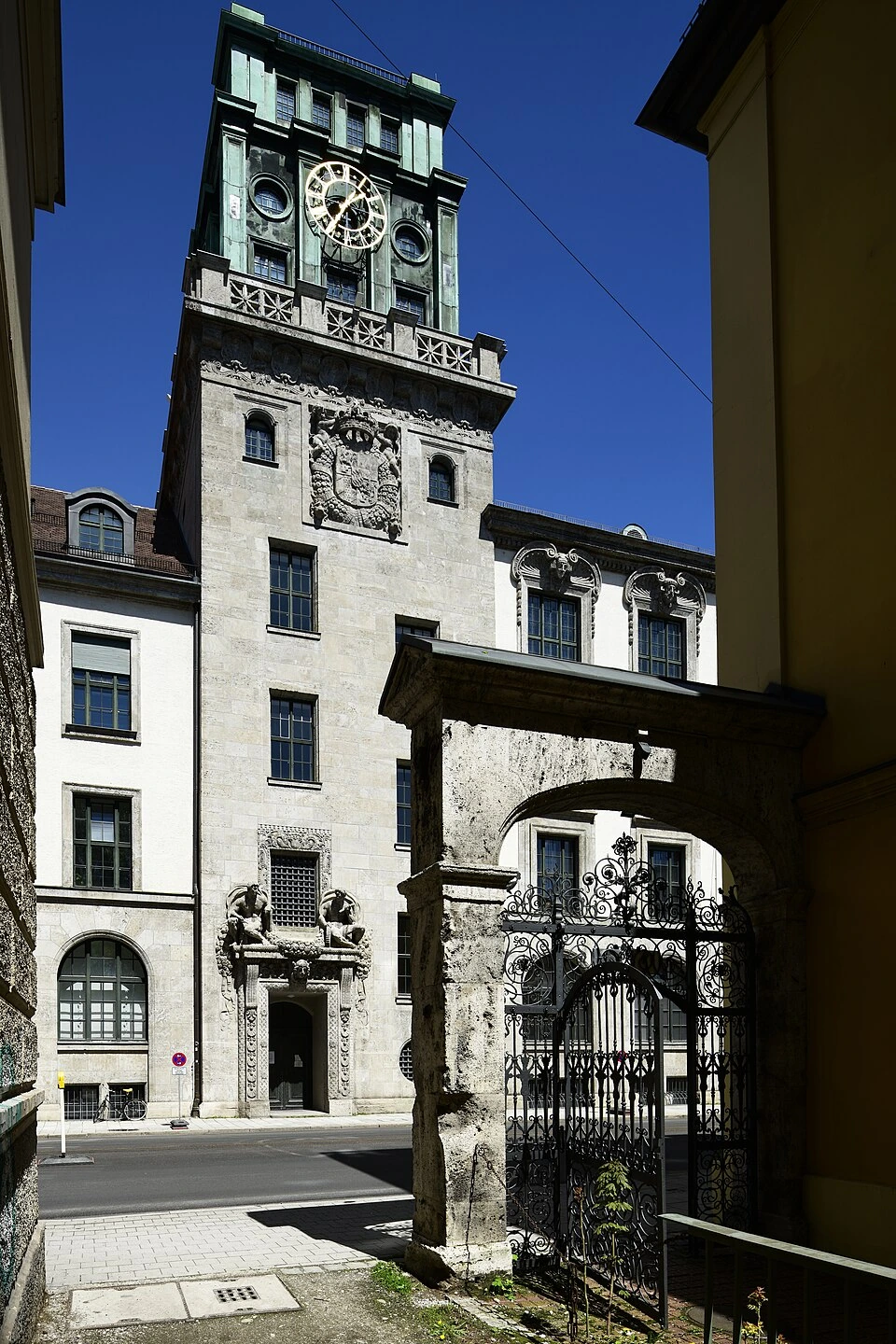
Higher sticker prices, though a small group gives generous aid to admitted international students. The Ivy League belongs here.

Tiny classes. Professors who actually know you. Teaching aimed squarely at undergrads. If you want a close-knit place, look here.
Ten public members of the Association of American Universities (AAU), a club of leading research universities. Public options come first with us.
| No. | Public University | City, State | Popular Fields | Official Website |
|---|---|---|---|---|
| 1 | University of California, Berkeley | Berkeley, California | Computer Science, Engineering, Business | Official site ↗ |
| 2 | University of California, Los Angeles (UCLA) | Los Angeles, California | Life Sciences, Engineering, Film, Business | Official site ↗ |
| 3 | University of California San Diego | San Diego, California | Biology, Engineering, Data Science | Official site ↗ |
| 4 | University of Michigan | Ann Arbor, Michigan | Engineering, Business, Public Policy | Official site ↗ |
| 5 | Georgia Institute of Technology | Atlanta, Georgia | Engineering, Computer Science | Official site ↗ |
| 6 | University of Illinois Urbana-Champaign | Urbana-Champaign, Illinois | Computer Science, Engineering, Accounting | Official site ↗ |
| 7 | The University of Texas at Austin | Austin, Texas | Engineering, Business, Computer Science | Official site ↗ |
| 8 | University of Washington | Seattle, Washington | Computer Science, Medicine, Public Health | Official site ↗ |
| 9 | University of Wisconsin–Madison | Madison, Wisconsin | Engineering, Sciences, Agriculture | Official site ↗ |
| 10 | Purdue University | West Lafayette, Indiana | Aerospace, Engineering, Agriculture | Official site ↗ |
The full 38 public AAU members on one page, with city, state and year joined, plus tuition and STEM checks.
Download List of Public Research UniversitiesThe eight private universities of the Ivy League. Getting in is very competitive, and several meet the full demonstrated need of admitted international students. Check each one's current aid policy for international applicants.
| No. | Ivy League University | City, State | Known For | Official Website |
|---|---|---|---|---|
| 1 | Brown University | Providence, Rhode Island | Open curriculum, sciences, humanities | Official site ↗ |
| 2 | Columbia University | New York, New York | Engineering, journalism, business | Official site ↗ |
| 3 | Cornell University | Ithaca, New York | Engineering, hotel administration, agriculture | Official site ↗ |
| 4 | Dartmouth College | Hanover, New Hampshire | Undergraduate liberal arts, business | Official site ↗ |
| 5 | Harvard University | Cambridge, Massachusetts | Law, business, medicine, public policy | Official site ↗ |
| 6 | Princeton University | Princeton, New Jersey | Mathematics, economics, public policy | Official site ↗ |
| 7 | University of Pennsylvania | Philadelphia, Pennsylvania | Business (Wharton), nursing, engineering | Official site ↗ |
| 8 | Yale University | New Haven, Connecticut | Law, humanities, sciences | Official site ↗ |
Every Ivy League university on one page: city, founding year, what it's known for, and the aid, test and deadline checks to make.
Download List of Ivy League UniversitiesWhat should I check before I pay any US university? Two things, and only on official sites. Is it accredited by an agency the US Department of Education recognizes? Is it SEVP-certified to issue I-20s? A no on either means it's out.
Your city sets your rent, part-time work and internships. Here's how the big student cities compare.
| City or Area | Universities There (Examples) | Living Cost | Why Students Pick It |
|---|---|---|---|
| New York City | Columbia, NYU | Very high | Finance, media, and tech jobs; a large internship market |
| Boston & Cambridge | Harvard, MIT, Boston University, Northeastern | Very high | The biggest student city; biotech and research |
| San Francisco Bay Area | UC Berkeley, Stanford | Very high | Silicon Valley tech companies and startups |
| Los Angeles | UCLA, USC | High | Entertainment, engineering, and business |
| Seattle | University of Washington | High | Large tech companies, cloud and software |
| Chicago Area | University of Chicago, Northwestern, University of Illinois Chicago | Moderate to high | Finance, business and consulting; strong public transport |
| Atlanta | Georgia Tech, Emory | Moderate | Engineering, logistics and a growing tech scene |
| Austin | UT Austin | Moderate | A fast-growing tech hub |
| Pittsburgh | Carnegie Mellon, University of Pittsburgh | Lower | Robotics, AI, and healthcare |
| College Towns | UIUC (Urbana-Champaign), Purdue (West Lafayette), UW–Madison | Lower | Campus life, engineering and lower rent |
Treat the living cost column as a rough guide from average rents. For exact numbers, see the university's cost of attendance page or College Navigator.
Your scores shape your list more than you'd expect. Here's what each route asks for.
| Test | Who Needs It |
|---|---|
| English: TOEFL, IELTS or Duolingo English Test | Both routes, unless waived. Each university picks the tests it takes and the score it wants. |
| SAT or ACT | Bachelor's applicants, where the university requires or recommends it. Some selective universities require it again; others are test-optional. |
| GRE | Master's applicants, where the program asks for it. Many programs have made it optional; competitive STEM programs still value a strong score. |
| GMAT or GRE | MBA applicants, unless the school offers a waiver. |
From January 21, 2026, TOEFL iBT scores come on a 1–6 band scale. Until January 2028, your report will include the old 0–120 score. Check each university's requirement, and read how the new TOEFL score works.
Start with official practice sets, written by the test makers themselves, at no cost.
| Test | When I Start Preparing | Official Practice |
|---|---|---|
| TOEFL iBT | 2 to 3 months before my test date | ETS official practice tests |
| IELTS | 2 to 3 months before my test date | IELTS official practice material |
| Duolingo English Test | 4 to 6 weeks before my test date | Duolingo English Test practice test |
| SAT | In Class 11, 3 to 6 months before my first attempt | College Board Bluebook practice tests |
| ACT | In Class 11, 3 to 6 months before my first attempt | ACT official practice test |
| GRE | 2 to 4 months before my test date | ETS POWERPREP practice tests |
| GMAT | 3 to 4 months before my test date | mba.com official starter practice |
Most students sit a test twice. Book early so there's room for a retake.
Route, shortlist and test plan sorted. Now for timing.
| Intake | Semester Starts | Bachelor's Deadlines | Master's Deadlines |
|---|---|---|---|
| Fall Intake | August / September | Early Decision and Early Action around November 1–15; Regular Decision around January 1–15 at many universities | Around December to February at many universities |
| Spring Intake | January | Fewer programs; deadlines around August to November | Fewer programs; deadlines around August to October |
| Summer Intake | May / June | Rare for new Bachelor's students | A few programs; deadlines set by each program |
Fall brings the widest choice of programs and the most financial aid. Deadlines differ by program, so go by the program page. Start planning 12 to 18 months ahead.
Most programs, most scholarships. Choose fall if your tests and papers will be ready in time.
Fewer programs and less aid, but you gain a few months for tests and applications. Handy if fall comes too soon.
Just a few programs, mostly at Master's level. Check that the university takes new international students in summer.
How those months turn into a real application, from route check to arriving on campus.

Bachelor's, Master's or MBA, depending on what you hold today.

Public First. Officially Verified. Profile Aligned.

English test first, then the SAT, ACT, GRE or GMAT if needed.

Submit through the Common App or the university's own portal, on time.

Show your funds, pay SEVIS, do the DS-160, then the F-1 interview.

Land up to 30 days before classes, then go see the international student office.
One checklist covers all three routes. Universities add their own details, so check each program page too.
| Document | Bachelor's | Master's | MBA |
|---|---|---|---|
| Application form and fee | ✓ | ✓ | ✓ |
| School transcripts (Grades 9–12) | ✓ | Not needed | Not needed |
| Degree transcripts and certificates | Not needed | ✓ | ✓ |
| English test score | ✓ unless waived | ✓ unless waived | ✓ unless waived |
| SAT or ACT score | Where required | Not needed | Not needed |
| GRE or GMAT score | Not needed | Where required | ✓ unless waived |
| Essays or statement of purpose (SOP) | Common App essay and university essays | Statement of purpose | MBA essays |
| Letters of recommendation (LORs) | School counsellor and 1–2 teachers | 2–3 from professors or employers | 1–2, mostly from employers |
| Resume or CV | Activities list | ✓ | ✓ |
| Credential evaluation (WES, ECE) | Where asked | Where asked | Where asked |
| Portfolio | Art, design, architecture | Art, design, architecture | Not needed |
| Interview | Some universities | Some programs | Most programs |
| Financial documents (bank statements, sponsor letter, loan letter) | ✓ for the I-20 | ✓ for the I-20 | ✓ for the I-20 |
| Passport copy | ✓ | ✓ | ✓ |
Spell your name exactly as your passport does, everywhere. One stray letter is enough to delay the I-20 or visa.
Short answer: The Common App is a single online form that many US universities take for Bachelor's admission. Fill it once, then send it to several schools.
Short answer: Depends on your list. Lots of universities take it; some prefer their own portal or another platform.
An admission letter brings costs with it. Here's what to budget, including the proof of funds your I-20 needs.
| Cost Category | Approximate Cost |
|---|---|
| Tuition at public universities (Bachelor's) | $31,880 a year on average, at the out-of-state rate international students pay (2025–26) |
| Tuition at private universities (Bachelor's) | $45,000 a year on average (2025–26) |
| Master's and MBA tuition | Set by each program; check the program's cost of attendance page |
| Housing and food | Approx. $13,900 a year at public and $15,920 at private universities (2025–26 averages) |
| Health insurance | Set by each university; most ask you to buy their student plan or show equal coverage |
| Proof of funds | At least your first-year cost of attendance, as shown on your I-20 |
| Visa and SEVIS fees | $185 visa application fee, $350 SEVIS I-901 fee, and a $250 visa integrity fee charged when the visa is issued |
Tuition and housing averages are from the College Board's Trends in College Pricing. They're university, government and living costs in the USA, not AAV's service fee, which you'll see separately in your local currency.
Change any number to match your plan. The total updates as you type.
Pick a university to plan around. The list changes when you switch between Public and Private.
4 years for a Bachelor's; 1 to 2 years for a Master's or MBA. Master's tuition is set by each program, so enter your program's figure above.
Each university sets its own application fee. Take it from the admissions page, and the total updates with the number of universities.
Most universities require their own student health plan. Enter the cost from your university's health insurance page.
After tuition, rent is your biggest cost. Here are the four main ways students live, and who each one suits.
| Type | What It Is | Good For | Cost Guide |
|---|---|---|---|
| On-Campus Residence Hall | A dorm room on campus, shared or single, and normally a meal plan. First-years are often required to live there. | Bachelor's students in their first year | Housing and food average $13,900 a year at public and $15,920 at private universities (2025–26) |
| On-Campus Apartment | Apartments on campus with a kitchen, aimed at grad students. They fill up quickly, so get in early. | Master's and MBA students | Set by each university; check its housing page |
| Off-Campus Shared Apartment | A private flat shared with flatmates. Leases mostly run 12 months, with a deposit up front. | Students from the second year, and most Master's students | Depends on the city. Don't forget bills, Wi-Fi and getting around. |
| Homestay | A room in a family home, some meals thrown in. The school or an agency finds the family. | Younger students and English-program students | Set by the program; check what the price includes |
Your university publishes a yearly cost of attendance. That number is what your I-20 funds must cover.
Five main kinds of funding exist. Most comes from universities themselves, so where you apply really matters.
For good grades, scores or achievements. Some universities consider everyone; others want a separate form.
Depends on what your family is able to pay. A handful of private universities offer it to international students, often through the CSS Profile.
A teaching or research job that covers tuition, pays a stipend, or both. Far easier to get in a PhD.
Merit awards for graduate students, often linked to research. Competitive, and mostly for PhD or research-heavy Master's students.
For strong athletes a university team recruits. NCAA Division I and II schools offer them; Division III doesn't.
Governments, foundations and companies offer these. Deadlines come early, sometimes a year ahead.
Plan as if no scholarship is coming. If one shows up on your I-20, great, you'll need to show less money, but that only happens after admission.
Short answer: Doing a Bachelor's or Master's? Then yes. It's the visa for full-time study at a SEVP-certified school, and you apply once you're in and your I-20 shows up.
Admission done, money in place? The F-1 visa is the last thing between you and the flight.
 Your I-20
 A valid passport
 Your DS-160 confirmation page
 Receipts for your visa fee and SEVIS fee
 Financial documents that cover the amount on your I-20
 Your academic records and test scores
It's face to face, at a US embassy or consulate in your country (or where you live). People forget this bit: switch social media to public first. Yes, they check.
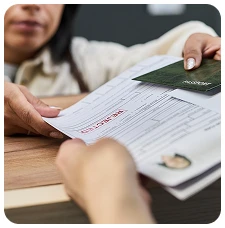





Right now, your F-1 status runs until your course ends. A rule to change that from September 15, 2026 was paused by a federal court the day before. We recheck before you apply and fly. The embassy decides; we make your case as strong as it gets.
Graduating isn't the finish line. Here's what comes next.
 Practical Training
Work in your field after each degree level, with employment authorization from USCIS.
 STEM Degrees
The STEM OPT extension, for degrees on the STEM Designated Degree Program List, with an E-Verify employer.
 Work Visa
Employer-sponsored and capped each year. Since the 2026 registration season, selection favors higher offered wages.
 Rules in Motion
H-1B fees and student-status rules are in the courts in 2026. We'll give you the current picture at each step.
Leave your number. A counsellor will call, go over your budget and papers with you, and map out your visa steps.
Request a Call BackCalls go out 9:30 AM to 6:30 PM IST, Monday to Saturday.
Short answer: Your spouse and unmarried children under 21 qualify for F-2 dependent visas. It's a separate visa application, and your funds have to cover them as well.
You've seen all eight steps. Before you talk to us, get some answers yourself: four quick checks, and results you bring to your session.
Look up any US school and confirm it's certified by the Student and Exchange Visitor Program.
What I get: A clear yes or no for my school
Check My SchoolAccreditation, costs, enrollment and graduation rates for any university, straight from federal data.
What I get: Official facts on each university
Look Up a UniversityPut in a loan amount, rate and term and see the monthly EMI before you meet a bank.
What I get: My monthly EMI
Calculate My EMIAsk an AAV student who's already there anything. You'll hear what brochures leave out.
What I get: An honest first-hand answer
Book a Student CallYou're welcome to plan every step yourself. If you'd like someone alongside you, this is how we work and who pays us.

In 2010, I moved abroad to study Environmental and Resource Management at BTU Cottbus in Germany.
I trusted the wrong consultant and paid for it. Amratpal A Vision is the consultancy I wish I'd had at eighteen. Today we guide students to eight destinations, the USA included, with one rule: the right university for your profile, not the one paying us.
If a university is wrong for you, I will say so. That is exactly what you are paying me for.Amratpal Singh Sohal · Founder & Director
Recognition from institutions and industry bodies we work with in international education.
Industry accreditation for international student recruitment agencies.
Recognition from ISM Germany.
Recognition for supporting students relocating abroad.
Accreditation for the Freshman Institute's English-taught foundation year.
See how our students went from profile evaluation and route planning to admission, visa and studying in the USA. Replace the placeholders below with the approved success stories already used on the AAV website.
Use an approved student story that shows the path from Class 12 to a US Bachelor's, from shortlist to offer letter.
Use an approved Master's story that shows how the right course and STEM check led to the right university.
Use an approved visa story that shows the journey after the offer letter: the I-20, proof of funds and the F-1 interview.
It isn't cheap. In 2025–26, public universities charged out-of-state students, which includes you, an average of $31,880 a year for a Bachelor's. Private ones averaged $45,000. Rent and food come on top. Master's and MBA fees depend on the program, and a few private universities give good aid to international students.
You've got two options. Finishing Class 12? Go for a Bachelor's. Already have a degree? Then it's a Master's or an MBA.
Depends on where you apply. A handful of selective schools (some Ivies too) want the SAT or ACT again; plenty of others are test-optional, which means sending a score is your call. Look up each university's policy.
Almost always. TOEFL and IELTS get accepted pretty much everywhere, Duolingo at lots of places, but minimum scores differ by university. Studied in English? A few universities waive it. And TOEFL iBT moved to a 1 to 6 scale on January 21, 2026.
Not always. Many universities want 16 years of education: 12 years of school and a four-year degree. A three-year degree gives you 15. Some still accept it, some look at your college's accreditation grade, and some ask you to study one more year.
It depends on your course. Most MBA programs want a GMAT or GRE score unless they waive it. Many Master's programs have made the GRE optional, but a good score still helps for competitive STEM courses.
OPT stands for Optional Practical Training. It lets you work in the USA in your field, for 12 months after each degree.
It's the student visa for full-time study at a SEVP-approved university, college or English school. You apply once you're admitted and your I-20 arrives. It lets you study full-time, work on campus up to 20 hours a week in term, and do CPT or OPT once approved.
Yes, as long as you stick to F-1 rules. That means campus jobs only, 20 hours a week max during term and full-time in breaks. Anything off campus needs CPT or OPT approval first.
There are three. $185 goes on the visa application and $350 on SEVIS. Then, if the visa's approved, a $250 visa integrity fee. Amounts get updated, so check the current ones.
No. Anyone who promises that isn't being straight with you. Universities pick students, embassies issue visas. We make your application as strong as it gets.
Free consultancies get paid by universities for every student they send. We get paid only by you. That's why we're free to tell you the truth, like when your profile falls short for a university, or when a university on your list isn't worth the money.
Most consultancies work for universities. We work for families, and that's why our US shortlist is honest. Public First. Officially Verified. Profile Aligned.