

9 Universities in the Global Top 100
UNSW Sydney, the University of Melbourne and the University of Sydney sit at the top of Australia's list in the QS World University Rankings 2027.
This guide walks you through studying in Australia, from picking a university to getting your visa. We have built it around the two routes our students actually take: a Bachelor's after school, or a Master's after your degree.
Universities pay most consultancies. Families pay us. We do not take university commissions, so every university on your shortlist is there because it suits you, and nobody paid us to put it there.
Read more ▼
 01 / 08
You come in one of two ways: a Bachelor's after Class 12, or a Master's after your degree, with MBAs in the same lane. What you hold today decides which one is yours.
See both routes02 / 08There's no one magic percentage. Each university sets its own entry score for every course, so lower marks just mean a shorter list to choose from.
Low marks or backlogs?03 / 08Got a three-year degree? Most universities will still take you for a coursework Master's. Just keep it to two academic years if the 485 visa matters to you.
Read the 3-year rule04 / 08For the visa alone, IELTS 6.0 (or PTE 47, or TOEFL iBT 67) from a proper test center does it. Universities mostly ask for 6.5, so we'd aim there.
Check English scores05 / 08February is the big intake and July is the second. A few universities also start in November. Give yourself nine to twelve months to get everything ready.
See intake dates06 / 08That's what Home Affairs wants to see for a year of living costs. Any first-year tuition you haven't paid, plus your travel, goes on top.
Work out your total07 / 08You apply online through ImmiAccount with your CoE, Genuine Student answers, proof of funds, health cover and an English test result.
See visa documents08 / 08After a Bachelor's or coursework Master's, the 485 visa gives you up to two years to stay and work if you're 35 or under. Regional study adds more.
Life after graduationBefore we recommend an Australian university, our counsellors go and see it. They walk the campus, see where students live, and get a feel for the city. So when we tell you something about a university, we are telling you what we saw.


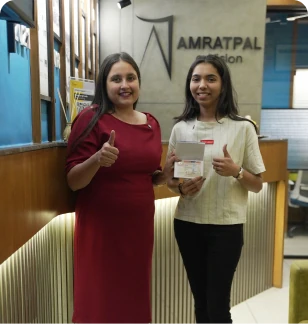
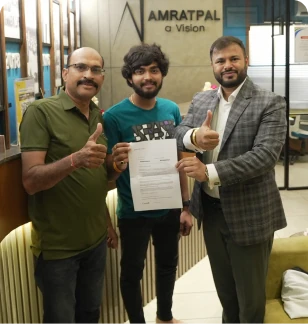
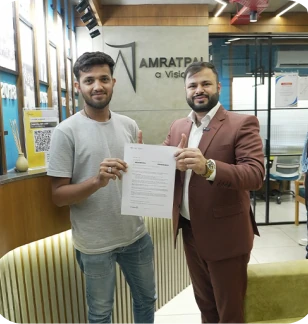
Every student you see here agreed in writing to appear. Everyone's results are different, and someone else's outcome doesn't guarantee yours.
Most families start with one question: is Australia worth the money? Here is why so many students say yes.
UNSW Sydney, the University of Melbourne and the University of Sydney sit at the top of Australia's list in the QS World University Rankings 2027.
Most Bachelor's degrees wrap up in three years. Engineering, honors and a few professional degrees run to four.
During the semester, you are allowed 48 hours of work every two weeks. During official breaks, there is no cap.
If you meet its rules, the Temporary Graduate visa (subclass 485) gives you up to two years to stay and work after a Bachelor's or coursework Master's.

There are eight steps, and this page takes them in the same order you will. Read from the top, or skip straight to the step you are on.
 Which Pathway Fits Me?Bachelor's or Master'sStart hereWhich Course Should I Study?Top courses by level
 Which University Fits Me?Group of Eight and beyond
 Which English Test Do I Need?IELTS, PTE or TOEFL
 When Do I Start?February or July
 How Do I Apply?Offer, then CoEWhat Will It Cost Me?Fees and living costsHow Do I Get the Visa?Subclass 500
So Australia looks like a fit. Where you start depends on what you're holding right now. Our students come in through one of two doors, so pick the one that sounds like you.
Finishing school? Start here.
A Bachelor's is your first university degree, and most recognized school certificates get you in directly. So the question isn't really whether you'll get in somewhere. It's whether your marks and subjects match the course you've set your heart on.
Starting before 18? Home Affairs wants someone looking out for you: either a parent or relative it has approved, or housing and care your university sets up. Sort this out before you accept an offer, because it's much harder afterward.
Already got a degree? This is your route.
Most of our students who already hold a degree come this way. Admission comes down to your degree, your grades and how well your subjects fit the program, and every university draws that line differently.
MBAs belong here too, though schools want you to have worked for a while first, and each sets its own number of years. Just graduated? A business, management or analytics Master's suits you better.
Entry rules belong to each university, and they shift over time. We check your profile against whatever rules apply when you actually apply.
Australia rewrote several student rules in 2025 and 2026. Plenty of what's online still quotes the old numbers, so read this before you plan anything.
Every student visa application now includes a short set of questions about you, your course, and your plans. Home Affairs reads your answers to decide if you're a genuine student. If your course follows on from what you've studied and leads where you want to go, that's an easy story to tell. If it doesn't, it's the hardest thing to explain, which is why we pick your course before anything else.
 1
Applications lodged from July 1, 2026 cost AUD 2,500, up from AUD 2,000. You'll find the fee on Study Australia.
 2
Australia is keeping new international student places at 295,000 for 2027. Visas move fastest while your university is under 80% of its allocation, which is one more reason to apply early.
 3
If you sat your test on or after August 7, 2025, the visa requires IELTS 6.0, PTE Academic 47, or TOEFL iBT 67 for direct entry. Tests taken at home or online don't count.
Planning to stay and work after you graduate? This is the visa you'll apply for. Four things to keep in mind:
Short answer: In a lot of cases, yes. Australia doesn't have one national cut-off. Every university sets its own score for every course, so lower marks shorten your list. They don't wipe it out.
Short answer: Yes, at most of them. Three years of recognized undergrad study is enough for a coursework Master's. What changes is how long the Master's takes.
Short answer: Think of CRICOS as working like the government's guest list: only institutions and courses on it get to teach students holding a student visa. No CRICOS listing, no student visa for that course.
Engineering and IT lead, followed by business, health, data science and AI. A lot of these courses slot in an internship or a real industry project, which helps your CV later. Pick a level to see what students ask us about most.
Don't worry if names look slightly different at each university; every course still has its own entry rules. We match courses to your marks and subjects before you apply.

Tell a counsellor your marks, your subjects and where you want to work, and we'll cut the list to what actually suits you.
Request a Call BackWe call you back between 9:30 AM and 6:30 PM IST, Monday to Saturday.
You've got your route. Now, where do you study it? First, get a feel for the three types of public university. Names come after.

Australia's eight big research universities. Entry scores and fees are higher, and employers worldwide know the names.
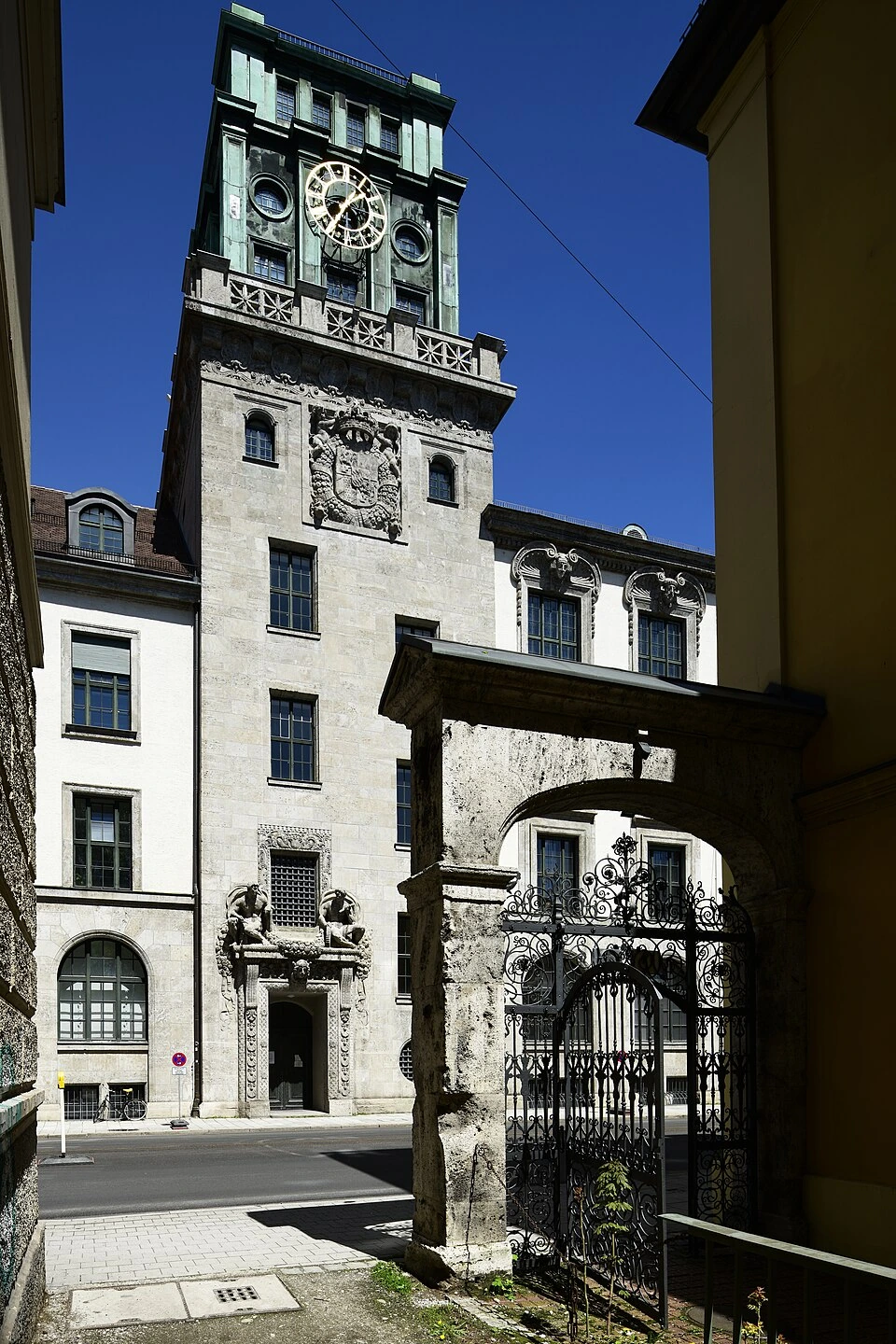
UTS, RMIT, QUT and Curtin. Lots of hands-on work, live industry projects and local employers close by.

Rent's lower and classes are smaller. Pick a regional campus (Adelaide and Perth both count) and you earn one or two more years of post-study work.
All eight are public, and all eight make the global top 100 in the QS World University Rankings 2027. Expect higher entry scores and fees at the top of the Australian range.
| No. | QS 2027 (World) | University | City | Popular Fields | Official Website |
|---|---|---|---|---|---|
| 1 | #19 | UNSW Sydney | Sydney | Engineering, Computer Science, Business, Law | Official site ↗ |
| 2 | =22 | University of Melbourne | Melbourne | Medicine, Law, Commerce, Engineering | Official site ↗ |
| 3 | #28 | University of Sydney | Sydney | Medicine, Law, Business, Architecture | Official site ↗ |
| 4 | #29 | Australian National University (ANU) | Canberra | Politics, International Relations, Computer Science, Sciences | Official site ↗ |
| 5 | #31 | Monash University | Melbourne | Pharmacy, Engineering, IT, Business | Official site ↗ |
| 6 | =40 | University of Queensland (UQ) | Brisbane | Biotechnology, Environmental Science, Business, Engineering | Official site ↗ |
| 7 | =77 | University of Western Australia (UWA) | Perth | Mining and Resources Engineering, Agriculture, Sciences | Official site ↗ |
| 8 | #79 | Adelaide University | Adelaide | Engineering, Health Sciences, Agriculture and Wine Science | Official site ↗ |
One PDF, all eight Group of Eight universities: their QS 2027 positions, cities, popular fields, plus the questions we'd ask before applying.
The full Go8 line-up, each with its QS 2027 spot, home city, popular fields and website link.
Download the Group of Eight ListOutside the Group of Eight, these ten public universities placed highest in the QS World University Rankings 2027. They shine for career-focused courses, and the fees are often kinder than at the Go8. You'll find all 28 in the download below.
| No. | QS 2027 (World) | University | City | Popular Fields | Official Website |
|---|---|---|---|---|---|
| 1 | =87 | University of Technology Sydney (UTS) | Sydney | IT, Engineering, Design, Business | Official site ↗ |
| 2 | =119 | RMIT University | Melbourne | Design, Engineering, IT, Media | Official site ↗ |
| 3 | =126 | Macquarie University | Sydney | Business, Actuarial Studies, Accounting, IT | Official site ↗ |
| 4 | #189 | Curtin University | Perth | Mining, Engineering, Business, Health Sciences | Official site ↗ |
| 5 | #195 | University of Wollongong (UOW) | Wollongong | Engineering, IT, Business | Official site ↗ |
| 6 | #227 | Deakin University | Melbourne, Geelong | Sport Science, IT, Business, Nursing | Official site ↗ |
| 7 | =230 | Griffith University | Brisbane, Gold Coast | Hospitality, Tourism, Criminology, Health | Official site ↗ |
| 8 | #240 | Queensland University of Technology (QUT) | Brisbane | Business, Engineering, IT, Creative Industries | Official site ↗ |
| 9 | =241 | La Trobe University | Melbourne | Health Sciences, Business, IT | Official site ↗ |
| 10 | #244 | University of Newcastle | Newcastle | Engineering, Medicine, Nursing | Official site ↗ |
What should I ask before I pay a private college? Ask them straight out: "Is this course on CRICOS, and is my degree awarded by you or by a partner university?" Private colleges market hard to international students, and some teach a degree that another institution actually awards. Make sure you know whose degree you're paying for. We always look at public universities first.
All 28 public universities outside the Group of Eight, in QS 2027 order. Add the Group of Eight list, and you'll have all 36 of Australia's public universities.
Australia's other 28 public universities in QS 2027 order, with what each is known for and where the regional benefit applies.
Download the Full Public Universities ListAll teaching happens in English, which is why one test score ends up deciding two things: your offer and your visa.
| What It Is For | What You Need |
|---|---|
| Student visa (subclass 500) | IELTS 6.0, PTE Academic 47, or TOEFL iBT 67 for direct entry, taken at a test center. |
| Bachelor's admission | Up to each university, though most courses ask for IELTS 6.5 overall and 6.0 in every band. |
| Master's admission | IELTS 6.5 for most programs. Teaching, nursing, law, and health programs ask for more. |
| 485 visa after you graduate | IELTS 6.5 overall and at least 5.5 in each band, from a test you took in the 12 months before applying. |
Aim for the university's score rather than the visa's. It's the higher of the two, so hitting it takes care of the visa as well. The full list of approved tests is on Home Affairs.
Route, shortlist, and English plan sorted? Next comes timing.
| Intake | Classes Start | Plan to Apply | What to Know |
|---|---|---|---|
| February Intake (Semester 1) | Late February or early March | June to October of the year before | The largest intake, with the widest choice of courses |
| July Intake (Semester 2) | Mid to late July | November to April before it | Most courses open; some Bachelor's programs start only in February |
| November Intake (Trimester) | November | May to August before it | Just the universities running trimesters |
Deadlines differ by university and the popular courses go fast. Add visa time on top, and 9 to 12 months of runway before classes start makes sense.
Short answer: From your first chat with us to touching down, budget roughly nine to twelve months.
So what actually happens in those months? Roughly this, from picking your route to enrolling after you land.

Bachelor's or Master's, and which courses your marks and subjects really meet.

Public First. Officially Verified. Profile Aligned.

You apply on each university's own website, uploading transcripts, your English score and a personal statement if they want one.

Pay the deposit and buy Overseas Student Health Cover (OSHC). Then your university sends your CoE.

Subclass 500, through ImmiAccount. You'll need your CoE, Genuine Student answers, proof of funds, a health check, and biometrics.

Let your university know your address within 7 days of landing, then complete your enrollment.
Short answer: Accept the offer, pay the deposit, and your university emails you a Confirmation of Enrolment (CoE). No CoE, no student visa application.
An offer letter comes with a bill. Here's what to budget for, including the money your visa needs to see.
| Cost Category | Approximate Cost |
|---|---|
| Bachelor's tuition | Approx. AUD 25,000–55,000 a year; Group of Eight courses sit at the top of the range |
| Master's tuition | Approx. AUD 30,000–60,000 a year; MBA programs are priced separately |
| Living expenses | Approx. AUD 2,000–3,000 a month, depending on the city and how you live |
| Rent | Approx. AUD 250–550 a week, from a shared room to a studio |
| Overseas Student Health Cover (OSHC) | Approx. AUD 600–900 a year for a single student, for your whole stay |
| Living-cost proof for the visa | AUD 29,710 for 12 months, plus first-year tuition and travel |
| Student visa fee | AUD 2,500 for applications from July 1, 2026 |
These are university, government and living costs in Australia. Our own service fee is separate and shown in your local currency.
Uses the Home Affairs living-cost figures in force on October 1, 2026, plus your own course fees.
Tip: Use the first-year fee from your offer letter. If you don't have one yet, the toggle drops in a sample figure.
This is what Home Affairs wants to see, not what you'll actually spend in a year.
Living costs: AUD 29,710 for you, AUD 10,394 for a partner, and AUD 4,449 per child, for 12 months. School-age children add school costs on top.
Most scholarships in Australia come from the universities, and most cover your tuition rather than paying you cash. These are the ones our students look at first.
| Scholarship | Offered By | Who It Is For | What It Covers |
|---|---|---|---|
| Destination Australia | Australian Government, through participating universities | Anyone studying at a regional campus, Bachelor's or Master's | AUD 15,000 each year to put toward fees and living |
| Australia Awards Scholarships | Australian Government (DFAT) | Students from countries that take part in the program | Tuition, flights and living costs, all paid |
| International Scientia Coursework Scholarship | UNSW Sydney | Top performers starting a Bachelor's or coursework Master's | Your whole tuition bill, start to finish |
| Chancellor's International Scholarship | Australian National University (ANU) | Strong students heading into a Bachelor's or Master's | A share of your tuition, every year you study |
| Melbourne International Undergraduate Scholarship | University of Melbourne | Bachelor's applicants with standout results | Part of your tuition, taken off the bill |
| International Merit Scholarship | Monash University | High achievers in a Bachelor's or coursework Master's | A credit against tuition each year |
| Global Excellence Scholarship | University of Western Australia (UWA) | Bachelor's and coursework Master's students who clear its grade bar | A set amount off tuition every year |
| Vice-Chancellor's International Scholarship | Deakin University | Truly exceptional Bachelor's and Master's students | As much as your entire tuition |
| Vice-Chancellor's International Scholarship | Macquarie University | Bachelor's or Master's students with good marks | A yearly cut to your tuition |
Every intake brings new amounts, dates and rules, and most university awards only open up after you've got an offer. So we build your budget assuming nothing comes through. Anything that does is a nice surprise.
Offer in hand and funds sorted? The last thing before you fly is the student visa.
The Student visa (subclass 500) application happens online, inside your ImmiAccount. Have these ready:
 Confirmation of Enrolment (CoE)
 A valid passport
 Your Genuine Student answers
 Proof of funds
 Overseas Student Health Cover (OSHC) for your whole stay
 An English test result
 Your academic transcripts
Expect a health check and biometrics too, in most cases. Home Affairs has the full, official checklist.






Home Affairs makes visa decisions, not AAV. Our job is to make your application as strong as it gets.
Go through your funds, documents and Genuine Student answers with a counsellor, and know your next move before you lodge.
Request a Call BackWe call you back between 9:30 AM and 6:30 PM IST, Monday to Saturday.
Your degree is where things start. Here's what opens up after you graduate.
 Post-Study Work
For Bachelor's and coursework Master's graduates aged 35 or under, once you've done at least two academic years of study in Australia.
 Regional Benefit
A second 485 visa, if you studied in a regional area and lived there on your first one.
 Work Rights
There's no cap on your hours on the 485, so you build real experience in your field.
 Permanent Residence
PR runs on a separate track: skilled or employer-sponsored visas, each with different rules. A degree alone won't get you there.
Short answer: Yes. Add your partner and children to your student visa application, and your funds must cover them too.
That's all eight steps. Before you talk to us, run your own numbers with these two quick tools and bring the results to your session.
Put in your first-year tuition and who's coming with you, and see the total Home Affairs expects you to show.
What I get: My proof-of-funds total
Calculate My FundsEnter a loan amount, interest rate, and term to see your monthly EMI before you talk to a bank.
What I get: My monthly EMI
Calculate My EMIYou're welcome to plan every step above on your own. If you'd rather have someone alongside you, here's how we work and who pays us.
Universities pay most consultancies. Families pay us. Our fee is the only money we make, so our advice starts and ends with your profile. Compared with other consultants in the market, we're one of the largest pathway providers in the industry. We take on the complicated cases, dig into them properly, and keep working until your future is secure.

| What matters | Amratpal A Vision | Commission-based consultancy |
|---|---|---|
| Who pays them | You, the family. We don't take commissions from universities. | Often the university, through a commission for every student placed. |
| University shortlisting | Public First. Officially Verified. Profile Aligned. Every course checked on CRICOS. | Lists often lean toward partner or private providers. |
| Visa preparation | We go through your funds and Genuine Student answers line by line before you lodge. | Often a document checklist, and not much else. |
| First-hand Australia knowledge | Our counsellors have visited more than 100 Australian campuses in person. | Hard to say. Ask whether your counsellor has actually set foot on that campus. |
| Talk to a real student | One-to-one calls with AAV students already studying abroad. | Testimonials on a website. |
| An honest "no" | We'll tell you when a course, a university or a timeline isn't right for you. | Less reason to say no when income depends on placements. |
We're comparing two business models here, not any particular company. Universities decide admission and Home Affairs decides visas, and no consultancy can promise either.

In 2010, I left home to study Environmental and Resource Management at BTU Cottbus in Germany.
I trusted the wrong consultant the first time around, and I paid for it. Amratpal A Vision is the consultancy I wish I'd had at eighteen. I didn't study in Australia, and I'm not going to pretend I did. What I do know is the student side of moving abroad: the paperwork, the visa, landing in a new country, and everything nobody warns you about. Our counsellors have walked more than 100 Australian campuses, so what we tell you about a university comes from seeing it.
If a university is wrong for you, I will say so. That is exactly what you are paying me for.Amratpal Singh Sohal · Founder & Director
Recognition from institutions and industry bodies we work with in international education.

Industry accreditation for international student recruitment agencies.
Award from the Internationales Studienkolleg at the University of Paderborn.
Recognition from ISM Germany.
Recognition for supporting students relocating to Germany.

Accreditation for the Freshman Institute's English-taught foundation year.
See how our students went from a profile check and an honest shortlist to an offer, a visa, and their first semester in Australia.
A Class 12 student who picked the right Bachelor's course at a public university, then went from offer letter to CoE without missing a deadline.
STUDENT NAME · UNIVERSITY · COURSE · INTAKEA graduate whose degree, grades, and English score matched a Master's program that fit both the profile and the family budget.
STUDENT NAME · UNIVERSITY · COURSE · INTAKEA student who got the funds, the Genuine Student answers, and every document in order, then landed in Australia ready for the first semester.
STUDENT NAME · UNIVERSITY · OUTCOME · INTAKETuition sits somewhere between AUD 25,000 and 60,000 a year, course and university depending. Living costs are extra.
Two levels: a Bachelor's after Class 12, A-Levels, IB, or another school qualification, and a Master's after a recognized Bachelor's. MBAs fall under the Master's route.
Mostly yes, unless an exemption covers you. IELTS, PTE Academic and TOEFL iBT all work, as long as you take the test at an official center.
Visa minimum: 6.0 overall for tests from August 7, 2025, but most universities want more. Aim for your university's score instead.
At most universities, yes, and your subjects are what decide how long the Master's actually runs. One thing worth watching closely, though: the 485 post-study work visa requires at least two academic years of study in Australia, so while a shorter Master's saves you money, it puts that visa at risk.
It's a short set of questions in your visa application about who you are, why you picked your course, and what you'll do after it. Home Affairs uses your answers to check you're really coming to study. It replaced the older GTE test back in March 2024.
A full first year's worth, made up of:
AUD 2,500 for most students, since July 1, 2026.
Yes: 48 hours a fortnight in term, and as much as you like in breaks.
If you're 35 or younger, the Temporary Graduate visa (subclass 485) gives you up to two years. Studied regionally? Add 1 to 2 more.
The two main ones are February and July. Universities that run trimesters start courses in November too.
It's the group of Australia's eight leading research universities:
All eight are in the QS 2027 global top 100.
Yes. Add your partner and children to your student visa application, and make sure your funds cover them. That's AUD 10,394 extra for a partner and AUD 4,449 for each child.
OSHC (Overseas Student Health Cover) is student health insurance, basically. Yes, you need it for your whole stay. Universities mostly want it sorted before your Confirmation of Enrolment (CoE) goes out, so don't leave it late.
The consultancies that charge nothing get paid by universities for every student they place. We don't take those commissions. You pay us, so we work for you, and that's why we'll tell you when your marks are short, or a university on your list isn't worth the money.
Every shortlist goes through three checks: Public First. Officially Verified. Profile Aligned. Public universities come first, every course gets checked on CRICOS, and the list starts from your profile instead of a partner list.
Yes. Complicated profiles are where we put in the most work. We find the universities where your marks qualify and give you an honest picture before you spend money on applications.
Every document gets checked before you apply. Then we test your funds against the visa rule, work on your Genuine Student answers together, make sure the course fits your background and line up your health check and biometrics.
Yes. They've been to more than 100 Australian campuses in person, so what we tell you about a university, its campus, or its city comes from seeing it ourselves.
No, and no honest consultant will. Universities decide admission, and Home Affairs decides the visa. What we promise is the strongest application possible.
Whether your profile is simple or messy, you get the same attention from one of the largest pathway providers in the industry. Most consultancies are paid by universities. We're paid by families, and that's exactly why our Australia shortlist is honest. Public First. Officially Verified. Profile Aligned.